
The Mountain Tribe joins the “Emission Reduction 2026” Caravan in Định Quán – La Ngà, Đồng Nai, highlighting the importance of community action, responsible outdoor practices, and long-term environmental stewardship in nature-based tourism.
The recent “Emission Reduction 2026” Caravan in the Định Quán – La Ngà area of Đồng Nai was more than a journey through one of the region’s remarkable natural landscapes.
It was an opportunity to connect people, organizations, and practitioners who share a common question:
How can we develop nature-based outdoor tourism while taking greater responsibility for the places that make these experiences possible?
For The Mountain Tribe, this is an important conversation.
We believe the future of outdoor and experiential tourism cannot be separated from the future of the natural environments in which those experiences take place.
From tourism experiences to environmental responsibility
Nature-based tourism depends directly on forests, rivers, lakes, mountains, wetlands, wildlife habitats, and local communities.
When these environments are healthy, they create opportunities for meaningful experiences, outdoor education, recreation, and local economic development.
But increased visitation also creates pressure.
More vehicles, waste, energy consumption, food, equipment, infrastructure, water use, and human activity can gradually affect the very environments that visitors come to experience.
This is why emission reduction and environmental responsibility should not remain as ideas discussed only at conferences or in sustainability reports.
They need to become everyday operating practices.
For outdoor tourism, this means asking practical questions:
- How do we travel to and within natural areas?
- How much waste does an experience generate?
- What happens to that waste afterward?
- How do we manage water and energy?
- How do we protect vegetation and wildlife?
- How do we manage visitor numbers and activity intensity?
- How do we educate visitors before they enter a natural environment?
- And perhaps most importantly: What condition do we leave the place in when we go home?
The importance of building a community
Environmental protection cannot depend on one organization working alone.
A responsible nature-based tourism ecosystem requires a community of practice involving tourism operators, outdoor educators, guides, accommodation providers, local communities, destination managers, businesses, visitors, and other stakeholders.
Each participant has a different role.
One operator may reduce transportation emissions. Another may improve waste management. A guide may educate visitors about local ecosystems. A campsite may reduce single-use materials. A visitor may change how they travel, consume, and interact with nature.
Individually, these actions may appear small.
Collectively, they can establish a different standard for how outdoor tourism is practiced.
This is one of the most important messages we take away from the “Emission Reduction 2026” Caravan:
Sustainable tourism needs more than awareness. It needs a community that is willing to practice, measure, improve, and hold itself accountable.
The Mountain Tribe: Environmental responsibility as a core policy
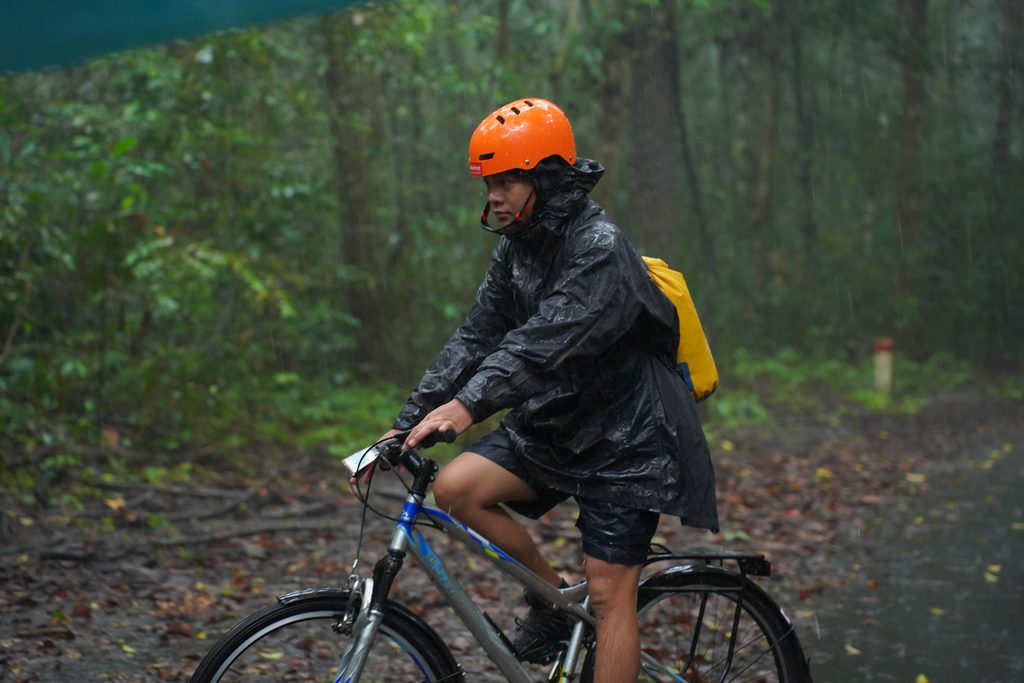
At The Mountain Tribe, environmental responsibility is not intended to be an occasional campaign.
It is integrated into the way we design and operate our outdoor and experiential education programs.
Our environmental approach is reflected through our Code of Conduct, environmental operating policies, and practices inspired by Leave No Trace principles.
These frameworks help our team and participants understand that entering nature comes with responsibilities.
We do not simply ask people to enjoy the forest, lake, river, or mountain.
We ask them to understand their relationship with that environment.
From “Leave No Trace” to “Leave It Better”
Building on the foundation of Leave No Trace, The Mountain Tribe is also introducing a new principle:
Leave It Better.
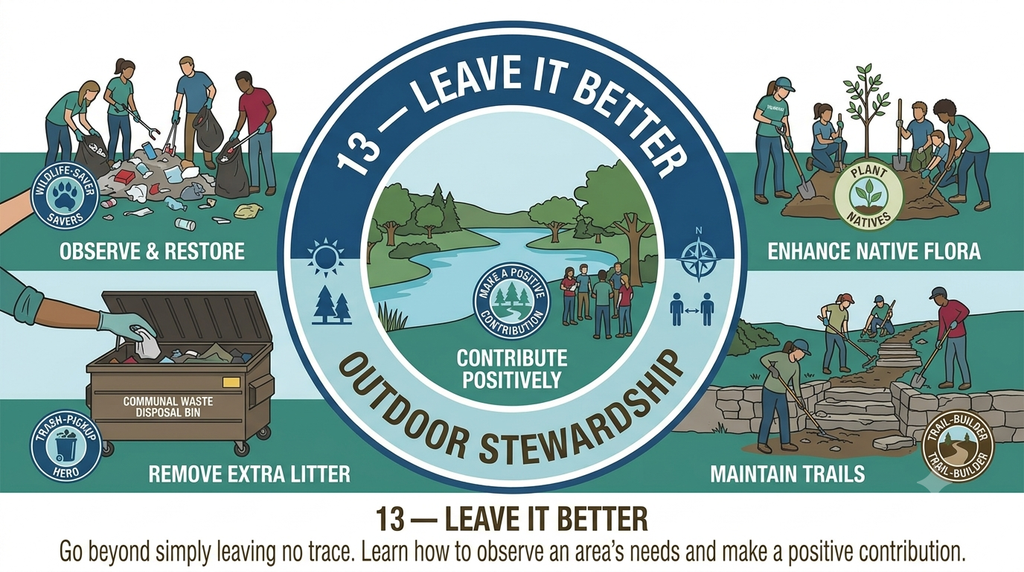
The idea was developed and inspired by Mr. Đặng Minh, Founder & CEO of The Mountain Tribe, as part of TMT’s continuing approach to responsible outdoor experiences.
Leave No Trace asks us to minimize our impact.
Leave It Better challenges us to think one step further.
After an experience, can we leave the place better cared for, better understood, or better respected than when we arrived?
This does not necessarily mean changing or physically improving a natural landscape.
Sometimes, leaving it better means removing waste that should not be there.
Sometimes, it means helping a participant understand why a habitat matters.
Sometimes, it means respecting local communities and cultural practices.
Sometimes, it means collecting data, identifying problems, reporting environmental issues, or changing an operational practice for the next group.
The principle is simple:
Enjoy nature. Respect nature. Take responsibility for your impact. Leave it better.
The future of outdoor tourism in Đồng Nai
Đồng Nai has significant potential for nature-based outdoor and experiential tourism.
The landscapes around Trị An Lake, Mã Đà, La Ngà, Định Quán, and surrounding natural areas provide opportunities for outdoor recreation, environmental education, adventure activities, community experiences, and experiential learning.
But the development of these destinations needs to happen alongside responsible environmental management.
The opportunity is not simply to attract more visitors.
It is to develop experiences that allow people to connect with nature without disconnecting from their responsibility toward it.
This creates an important direction for the future of outdoor tourism in Đồng Nai:
Nature should not only be the setting for tourism. Nature should also be part of the learning.
A shared standard for the next generation
For The Mountain Tribe, this is especially important because many of our programs are designed for young people.
The next generation will not simply inherit the natural environments that exist today.
They will inherit the consequences of the decisions we make about those environments today.
Outdoor education therefore has another responsibility beyond adventure and recreation.
It can help young people understand that every journey has an impact — and that responsible choices can become part of the experience itself.
From a simple day outdoors to a multi-day expedition, environmental responsibility can be embedded into the entire journey.
Experience → Reflect → Understand → Apply → Grow.
That is how outdoor experiences can become more than memories.
They can become habits, values, and action.
The journey continues
Joining the “Emission Reduction 2026” Caravan in Định Quán – La Ngà was a valuable opportunity for The Mountain Tribe to connect with others who are thinking seriously about the future of tourism and the environment.
It also reinforces something we have believed from the beginning:
Outdoor tourism cannot grow sustainably if the natural places that support it are continuously degraded.
The future requires cooperation, practical standards, transparent practices, continuous learning, and a community willing to take responsibility.
At The Mountain Tribe, we will continue working through our environmental Code of Conduct, Leave No Trace practices, and our new Leave It Better principle — integrating environmental responsibility into the way we design, lead, and evaluate outdoor and experiential education.
Because the goal is not simply to take people into nature.
The goal is to build a generation that knows how to belong in nature responsibly.
And when we leave, we should be able to say:
We experienced it.
We respected it.
We left it better.



Để lại một bình luận