School programs that integrate outdoor education and experiential learning into academic frameworks play a pivotal role in shaping well-rounded, globally aware students. These programs are designed to complement traditional classroom instruction, offering practical applications of theoretical knowledge and fostering critical life skills. By aligning such programs with globally recognized academic standards like the International Baccalaureate (IB) or Cambridge curricula, schools create opportunities for holistic learning that transcends the classroom.





EDUCATIONAL APPROACH
Here are three main educational approaches commonly used in school programs and outdoor education, especially for integrating experiential learning into academic curricula:

Experiential learning cycle
Learning by doing with reflection, where students actively engage in hands-on activities, reflection, and real-world application.

Place-based education
Using the local environment and community as the foundation for learning.

Interdisciplinary Learning
Integrating multiple subject areas to explore complex topics from various perspectives.
PROGRAM STANDARDS
Our program adheres to national educational policies and requirements while meeting international standards, ensuring we provide the best services and experiences for students.

National Recognition
- Aligned with Vietnam’s Ministry of Education and Training (MOET) standards for experiential learning and outdoor education.
- Compliance with local safety regulations and risk management protocols.
- Integration of Vietnamese cultural heritage and environmental education.
- Endorsements from local educational institutions and community partners.
- Adherence to TCVN 12592:2018 (ISO 21101:2014) for safety management systems in adventure tourism.
- Adherence to TCVN 12593:2018 (ISO 21102:2014) for the competence of adventure tourism leaders.
- Adherence to TCVN 12594:2018 (ISO 21103:2014) for information provided to participants in adventure tourism.

International Recognition
- Alignment with global outdoor education standards (e.g., Wilderness Education Association, Duke of Edinburgh’s Award).
- Adherence to international risk management frameworks, including ISO 31031 for youth and school trip safety and ISO 31000 for risk management.
- Cross-cultural learning models supporting global competencies.
- Partnerships with international schools and organizations for student development and exchange programs.
LEARNING OUTCOME PROGRESSION
Here’s a structured outline of outdoor learning outcomes for each grade from Grade 3 to Grade 12. These outcomes are progressive, building on previous skills while introducing new challenges and concepts appropriate to each developmental stage.
Grade 3 (Introduction to Outdoor Learning)
- Curiosity and connection with nature.
- Basic safety awareness and responsibility.
- Effective listening and following instructions.
- Cooperation and sharing in group settings.
Grade 4 (Basic Outdoor Skills)
- Awareness of the natural environment.
- Respect for nature and surroundings.
- Understanding of basic safety principles.
- Team collaboration and effective communication.
Grade 5 (Confidence and Cooperation)
- Enhanced self-confidence and independence.
- Awareness of personal responsibilities.
- Improved problem-solving and critical thinking.
- Team cooperation and mutual support.
Grade 6 (Foundation of Outdoor Leadership)
- Basic leadership and decision-making skills.
- Personal resilience and persistence.
- Awareness of environmental impact.
- Effective teamwork and conflict resolution.
Grade 7 (Intermediate Outdoor Skills & Personal Growth)
- Personal resilience and adaptability.
- Awareness of individual strengths and limitations.
- Improved collaboration and group dynamics.
- Environmental stewardship and care.
Grade 8 (Adventure & Cultural Connection)
- Understanding cultural contexts in nature.
- Increased self-reliance and initiative.
- Leadership in collaborative settings.
- Respect for diverse environments and communities.
Grade 9 (Expedition Planning & Risk Management)
- Independent decision-making and accountability.
- Risk awareness and management.
- Goal setting and achievement strategies.
- Reflective thinking and self-assessment.
Grade 10 (Leadership & Environmental Impact)
- Leadership and mentoring skills.
- Advanced risk assessment and management.
- Environmental ethics and sustainability awareness.
- Conflict management and group leadership.
Grade 11 (Advanced Outdoor Leadership & Global Citizenship)
- Advanced leadership and facilitation skills.
- Mentoring and role-modeling for peers.
- Global awareness and community service mindset.
- Personal growth through self-reflection.
Grade 12 (Capstone Outdoor Experience & Lifelong Skills)
- Mastery of leadership and personal accountability.
- Holistic understanding of personal development.
- Contribution to community and environment.
- Lifelong appreciation for nature and learning.
PROGRAM TYPES

In-School–Based Programs
These programs are designed to introduce students in Years 1–3 to the foundations of experiential learning through simple, age-appropriate outdoor activities. The focus is on giving students their first hands-on exposure to outdoor and experiential education—building curiosity, confidence, and enjoyment through doing, reflecting, and applying.
In addition, by utilizing existing school facilities and playground spaces, The Mountain Tribe can deliver a range of pre-requisite skills workshops to support:
- Preparation for International Award (e.g. Duke of Edinburgh) Expeditions
- Readiness for school trips and outdoor journeys
- Safety awareness and Standard Operating Procedure (SOP) familiarization
- Basic outdoor skills relevant to upcoming programs
These in-school sessions act as a foundation and readiness phase, ensuring students and teachers share a common understanding of skills, safety, and expectations before moving into more complex outdoor experiences.
Tailor-Made Consequences: Adventure Learning in Schools
Moving beyond traditional punishments, this program transforms consequences into purposeful learning experiences through adventure-based challenges. Students engage in structured outdoor and experiential activities that build responsibility, self-discipline, teamwork, and life skills—turning mistakes into opportunities for growth.
To ensure real impact, this program is ideally delivered through a long-term partnership:
- Minimum 3-year MOU, with a preferred 5–10-year MOU
- Ongoing, parallel support aligned with the school’s wellbeing and discipline framework
- Progressive program design that evolves as students grow
Across each trip and intervention, The Mountain Tribe provides individual student learning reports, allowing schools to:
- Track personal development over time
- Identify patterns, growth, and areas for support
- Build continuity from one experience to the next
This long-term approach ensures adventure learning is not a one-off intervention, but a consistent developmental pathway that supports students academically, socially, and emotionally—trip after trip.

Leadership Expeditions
Leadership Expeditions are multi-day, immersive programs designed to develop leadership, resilience, and self-awareness through real-world experience.
By combining outdoor challenges, community service, cultural exchange, and skill-building workshops, students:
- Practice leadership and decision-making in authentic contexts
- Strengthen teamwork, communication, and adaptability
- Grow through reflection, responsibility, and service
These expeditions provide a journey-based learning environment where leadership is learned by doing—supporting personal growth and transferable life skills beyond the classroom.
SAMPLE RESIDENTIAL PROGRAM
3-DAY SCHOOL TRIP – TMT BASECAMP – TRI AN LAKE
DAY 1:
- Arrival and Pick-up at the airport
- Welcome and Orientation at TMT Basecamp
- Local Immersion: Introduction to the culture and customs of the Dong Nai Province / Villange Challenges
- Dinner and Traditional Performance
DAY 2:
- Breakfast at Basecamp
- Lake Kayaking Adventure: Guided exploration of Tri An Lake and its surroundings
- Survival Campcrafting Workshops: Learn essential survival skills such as fire-making, shelter-building, and navigation
- Lunch at Basecamp
- Community Project: Solar Light Pole Setup – Participate in a hands-on project to install solar light poles in the local community
- Dinner and Campfire
DAY 3:
- Breakfast at Basecamp
- Final Challenge
- Final Debriefing: Share insights and experiences from the trip
- Packing and Check-out
- Departure from Basecamp
* Price: Starting 2,500,000 VND per day. Min 14 pax per group with 02 Instructors.
** This sample program serves as a template that schools can customize to suit their students’ specific needs, interests, and learning objectives.
EXPEDITION-BASED PROGRAMS
What’s coming for the 2026–2027 School Trip Season at TMT Basecamp – Tri An Lake?
We are opening early pre-booking for Leadership Expedition Programs at Tri An Lake and within the Dong Nai Culture and Nature Reserve.
Our core expedition formats include:
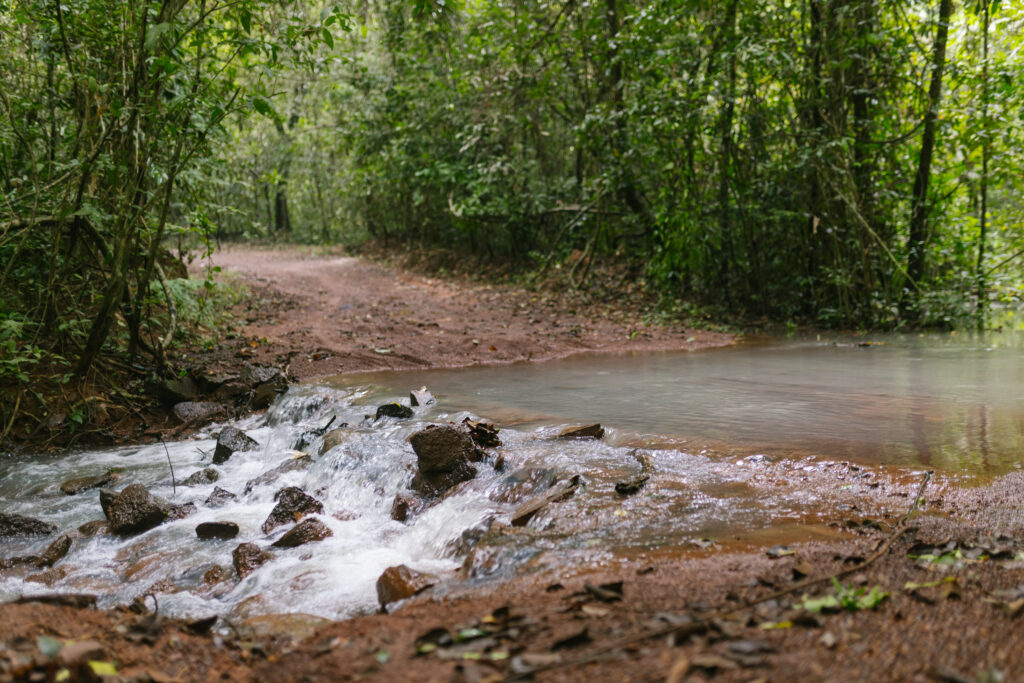
5D4N JUNGLE EXPEDITIONS
- Hiking / Trekking / Backpacking
- Mountain Biking / Bikepacking
Price: Starting 6,500,000 per day. Min 6 pax per group.
5D4N LAKE EXPEDITIONS
- Kayaking
- Stand-up Paddleboarding (SUP)
- Sailing (under consideration)
Price: Starting 6,500,000 per day. Min 6 pax per group.

For groups looking for deeper immersion, these journeys can be combined into extended expeditions of up to 10 days 9 nights, designed for a more comprehensive outdoor learning experience.
Consulting your school program
Looking to design or refine your school’s outdoor &experiential education program?
Consult with The Mountain Tribe to explore tailored solutions aligned with your curriculum, student needs, and long-term learning goals.