
Enhancing Education Beyond Classroom Walls
Education today transcends traditional classroom boundaries. International schools increasingly recognize the value of experiential learning, where students engage directly with their environment, develop practical skills, and foster personal growth. Annual school trips are essential to this holistic educational approach. Here’s why these trips are crucial and how they can be seamlessly integrated into school curricula for continuous and impactful learning.
The Benefits of School Trips
1. Experiential Learning
Experiential learning is at the core of educational trips. Students gain hands-on experience, which helps solidify theoretical knowledge. For instance, visiting a historical site or natural reserve offers direct interaction with the subject matter, making learning more engaging and memorable.
2. Personal Development
School trips provide opportunities for students to develop critical life skills such as teamwork, leadership, and problem-solving. Navigating new environments, working in groups, and facing challenges enhance their resilience and adaptability.
3. Cultural Exposure
International school trips often include visits to culturally significant locations. This exposure helps students appreciate diverse cultures, fostering global awareness and empathy—key components in today’s interconnected world.
4. Environmental Awareness
Outdoor education programs, like those offered by The Mountain Tribe, immerse students in nature, promoting environmental stewardship. Understanding ecosystems, conservation efforts, and sustainability issues firsthand encourages responsible attitudes towards the planet.
Integrating Learning Outcomes into School Programs
To maximize the benefits of school trips, it’s crucial to align them with educational objectives. Here are strategies to ensure these trips are consequential and continuous:
1. Curriculum Alignment
Aligning trips with the academic curriculum ensures that experiential learning complements classroom instruction. For example, a biology trip to a national park can reinforce concepts taught in the science curriculum.
2. Pre-Trip Preparation
Preparing students before the trip enhances the learning experience. Pre-trip lessons can cover the history, geography, or ecology of the destination, setting the context and objectives for the excursion.
3. Post-Trip Reflection
Reflection activities after the trip help solidify learning. Journals, presentations, or group discussions allow students to process their experiences and connect them with academic content.
4. Continuous Engagement
Annual trips should build on previous experiences, creating a progressive learning journey. Each trip can introduce more complex challenges and learning objectives, fostering continuous growth.
Diverse Programs Offered by The Mountain Tribe
The Mountain Tribe offers a range of school programs designed to cater to different learning outcomes and interests:
1. Creativity, Activity, and Service (CAS) Trips
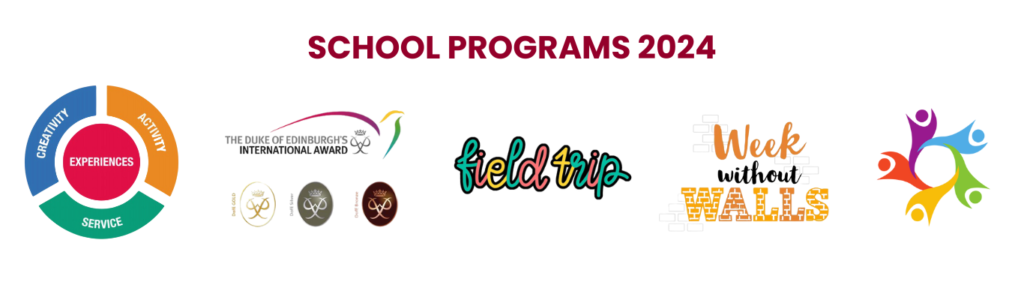
Our CAS trips are designed to foster holistic student development and global citizenship. Through engaging, experiential learning journeys, students combine creativity, activity, and service. They might engage in artistic projects, physical challenges, and community service activities, all aimed at nurturing well-rounded individuals.
2. Week Without Walls
During the Week Without Walls, traditional classroom boundaries are transcended. This program allows students to explore, learn, and grow beyond the confines of textbooks and desks. With hands-on experiences, outdoor adventures, and community engagement, Week Without Walls offers a transformative educational journey that fosters personal development and global awareness.
3. The Duke of Edinburgh’s International Award (DofE) Adventurous Journey
The Adventurous Journey is one of four sections required to earn a Bronze, Silver, or Gold DofE Award. This program challenges students physically and mentally in a teamwork environment, promoting leadership, resilience, and perseverance.
4. Cultural Immersions & Community Projects
These programs allow students to experience new cultures and give back to communities. Cultural immersions and community projects help students become responsible global citizens. They participate in activities like visiting traditional villages, engaging in local customs, and working on community improvement projects.
5. Tailor-Made Consequences: Adventure Learning in Schools
Our unique program transforms traditional punishments into engaging learning experiences through adventure-based challenges. This approach helps build responsibility, teamwork, and valuable life skills, turning consequences into opportunities for growth and learning.
Annual school trips are invaluable in fostering a well-rounded education. By integrating these trips into the curriculum, international schools can ensure that students gain not only academic knowledge but also essential life skills and global awareness. The Mountain Tribe‘s diverse programs offer tailored experiences that support continuous and impactful learning, preparing students for the complexities of the modern world.
For more information on how The Mountain Tribe can enhance your school’s educational programs, visit The Mountain Tribe School Programs.


Để lại một bình luận